
InOrder Subscriptions Module
The InOrder Subscriptions module allows the same customer – in fact the same order – to have both subscriptions and regularly stocked items. This module also does full unearned-to-earned income accounting and has extensive renewal marketing capabilities, including various renewal testing scenarios. Membership accounting with special Membership Price Lists and earned / unearned membership dues is also supported.
- The InOrder Subscriptions module allows you to sell subscriptions and memberships.
- Sell issue-based subscriptions where customers are purchasing a number of regularly published issues.
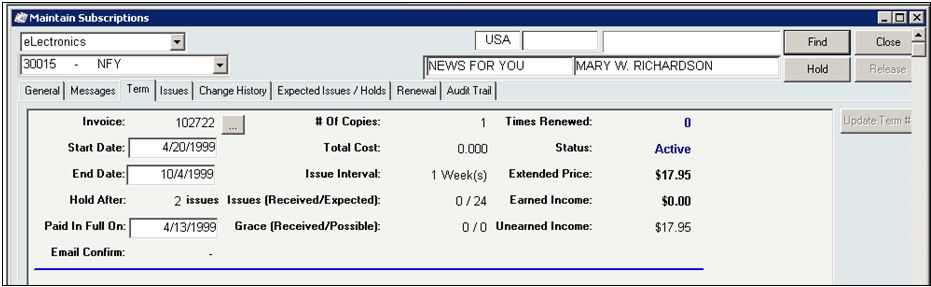
- Supports the sale of term-based subscriptions or memberships where the subscriber will receive any issues published until their expiration date.
- Deferred income tracking based on issues shipped or based on time until expiration.
- Subscribers can request custom renewals using a credit card on file.
- Subscriptions may be entered during regular order entry.
- Send welcome issues and farewell issues, as well as unscheduled gift issues.
- Gift issues do not accrue earned income.
- Support for expiring a subscription and backstarting selected missed issues upon renewal.
- Support for customer-specified backstart points when adding new subscriptions.
- Supports renewal series, which is a sequence of letters and/or emails in an effort to solicit subscription renewals before and after subscriptions expire.
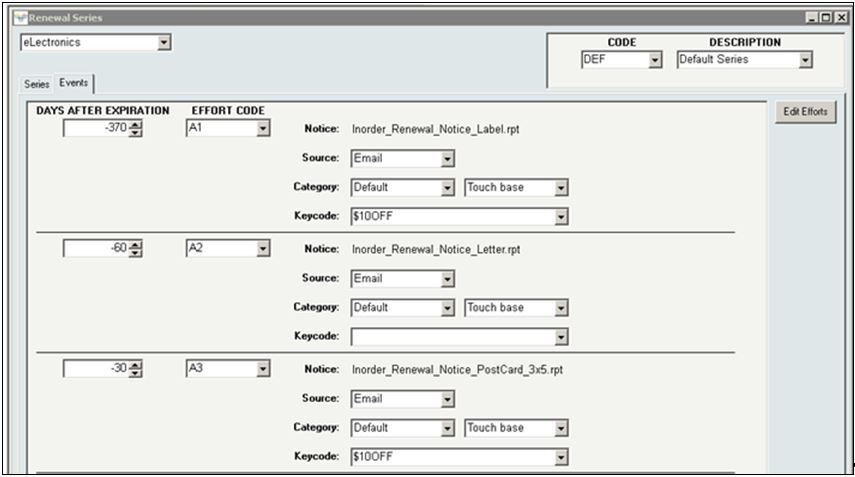
- Support for renewal series A-B testing and analysis.
- Customer Service functions are provided for adjusting number of issues or subscriptions term or for price adjustment. In all cases, the earned and unearned income is adjusted as appropriate.
- Supports grace issues with the ability to reclaim grace issue income if a renewal occurs.
- Includes a print requisition function for forecasting number of issues required over the next several issues to be sent.
- Includes the ability to group term subscriptions for combined issue mailing and for combined renewal effort and entry.
- Subscription issues may link to physical products or to generic issue items.
- Includes the ability to put subscriptions on hold after so many issues of non payment, with the ability to back start issues when payment is received.
- The InOrder Subscriptions Module is included with the InOrder Continuity Module, and it may be purchased separately.
- The InOrder Subscriptions Module integrates with InOrder Customer Service to view a customer’s active subscription and member statuses at any time. It also integrates with the InOrder real-time shopping cart, so customers may manage their own subscriptions.
For more information about the InOrder Subscriptions Module, contact Morse Data Corporation.


InOrder Catalog Request Manager Puts Your Brand in Your Customers’ Homes
Catalogs are necessary for direct response businesses. They attract new buyers, they help to sustain repeat buyers, and are typically less expensive than paid search advertising.
Customers can order catalogs from your sales reps:
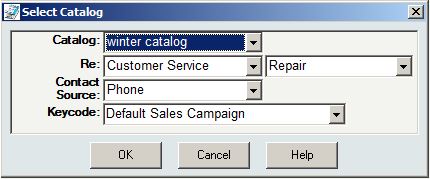
Or they can order catalogs from your website:
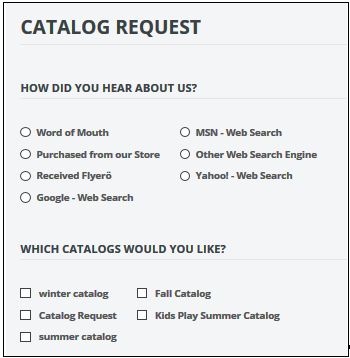
You can review a report of all pending catalog requests before sending, and use the customer’s timeline to remove any invalid requests or spam. Catalog requests are printed as labels or exported to a spreadsheet.
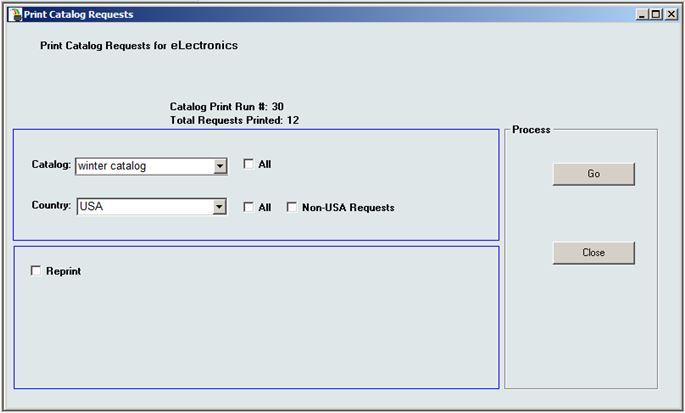
Setup is easy – simply define each catalog / brochure in the familiar InOrder interface.
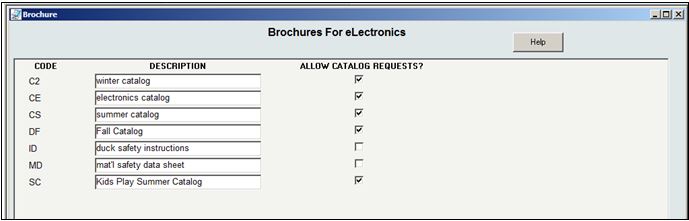
InOrder users have also leveraged this feature to track customers requesting other literature, such as rebate forms or white papers.
For more information about the InOrder Catalog Request Manager, contact sales@morsedata.com.
Helpful Articles for your Business
Involving your employees in marketing can be very good. This article explains how your customers can benefit from their knowledge, sense of ownership, and pride in your business. http://brandintegrated.com/blog/why-employees-should-get-involved-in-content-marketing/
Get the most from your ERP software by keeping it current.
Walmart’s belief in chip-and-pin payment is strong enough to take to court.
Pictures are a must-have to represent the items you offer, but videos can make you money. https://www.getinorder.com/blog/index.php/increase-web-store-sales/
8 Great Things to Know About InOrder
- InOrder is a fully integrated system that includes tools for order entry, demographic collection, return authorizations, repeat orders, order history, correspondence, and order taking. This means that you have the critical information you need in real-time, and your customers have up-to-the-minute views of what’s in stock. Information is all in one place where everyone who needs it can see it, from Marketing, to CSRs, to Management.
- InOrder is scalable to easily accommodate additional modules, enhancements, and users as your business grows. So you only buy what you need when you need it.
- InOrder offers US-based technical support.
- Contact management capabilities that easily accommodate additional CSRs for seasonal sales, and gives CSRs complete information from a single database.
- Marketing software supports complete marketing management with target list generation, promotions, personalization, loyalty programs, Email marketing, and more.
- Easily manage your financials in real-time across all departments. InOrder’s Job Cost Tracking and Report lets you track and report on the many detail-oriented tasks within your organization. Quote ongoing fulfillment jobs and individual kit building projects and automatically calculate project costs and profitability as the job parameters change – letting you know how low a quote you can submit and still turn a profit.
- Manage multiple client data separately in one database, yet allow them access through your customized, real-time system.
- Real-Time eCommerce links your website directly to your InOrder database. This flexible yet robust module gives you multiple images per item, short and long item descriptions, category and hierarchy controls, up-sell, cross-sell, B2C or B2B presentations based on login criteria and a completely customizable look and feel.
PCI DSS 3.2 and the Use of SSL/Early TLS as a Security Control
PCI DSS 3.2 is expected by the end of April 2016, and Dara Security has provided an overview of the expected changes.
One of the changes discussed is about the use of SSL/early TLS as a security control. The date to stop the use of SSL/early TLS has been extended to June 30, 2018; however, new implementation must not use SSL/early TLS at all.
Further, if you continue to use SSL/early TLS until June 30, 2018, you must have a “Risk Mitigation and Migration Plan” in place. This document should provide details about your plans to migrate to a secure protocol and the controls you’re using to reduce risks until your migration is complete.
The PCI Security Standards Council provides a document about migrating from SSL and Early TLS, which includes risks of using SSL/early TLS, the PCI DSS requirements affected, information about a Risk Mitigation and Migration Plan, and Frequently-Asked Questions.
For information about keeping your customers’ sensitive information secure with InOrder, please contact us.
Wish Lists Make Ordering Easy
A wish list is a basic feature of online stores that let customers buy when they’re ready, and makes ordering and re-ordering easy.
The InOrder Wish List feature allows web customers to build a list of products they hope to purchase in the future.
Users may add items to their wish lists, in addition to placing “regular” orders on the web site. The InOrder Wish List is maintained as a separate order, which enables them to be viewed or edited from InOrder in the same real-time fashion as regular web orders. Inventory levels are not affected by wish lists until wish list items are added to the shopping cart.
When a customer adds an item to his/her wish list or views the wish list, the View Wish List page is displayed. Items may be removed from the wish list and quantities may be updated on the View Cart page.
Shoppers may add one or all items from their Wish List to their shopping cart, and they may move items from their shopping cart to a Wish List.
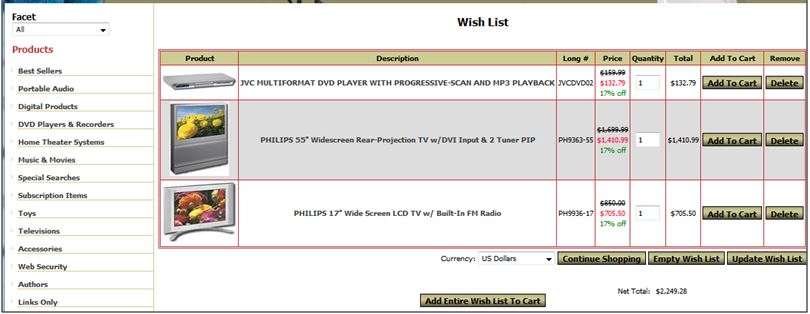
If enabled by your settings, items on a shopper’s wish list may also be displayed on a carousel on the home page.
The InOrder Wish List Enhancement provides the following features:
- Allow customers to convert their wish list into an active shopping cart.
- Allow customers to move items from their current shopping cart to their wish list.
- Allow Customer Service Reps to view a customer’s wish list and edit it when necessary. This can be useful when talking to a customer.
- Allow your Marketing Department to collectively report on and review items from customer wish lists. This can be helpful when making pricing or reorder decisions.
- Display wish lists on a carousel on the home page.
- Inventory levels are not affected by wish lists until wish list items are added to the shopping cart.
Contact us for more information about InOrder Wish Lists features.
How Many Ways Does an ERP System Improve Your Business?
An ERP system can help your business thrive by aligning with your business strategy, improving decision-making, and improving responsiveness to your customers.
An ERP system integrates information across your organization. It relies on a single database and automates the flow of information. It keeps all of your information in one place, and easily lets others across your enterprise view it, including marketing, customer service reps, and management. This data sharing leads to greater efficiency within your organization.
A well-designed ERP system incorporates the aspects of your business to give you a clear view of it. Real-time inventory and order tracking provides up to the minute views of what is in stock and where, across all channels, including retail point of sale, call center, and the Web.
An ERP system integrates your systems and processes with everything you need to manage your business, from financials to CRM. Keep track of products, customer spending patterns, available credit, and how much they owe. You can even automate tasks, such as providing shipping and delivery estimates, recovering abandoned carts to increase your revenue, prompting customers to visit your website using your packing slips and receipts, or avoiding backorders resulting from high volume customers.
So, how many ways can an ERP system improve your business?
Capturing Sales From Comparison Shoppers
Some shoppers research in stores, where they can touch and feel products, and then buy online at the best price they can find. This type of shopping challenges stores to find ways to capture sales before they walk out the door. They have to discover what motivates their customers to buy in-store, sign up for a store loyalty program, and interact with the store on Facebook. Could it be instant gratification and no shipping costs? Return policies?
Shoppers also research online and buy in stores, and online businesses need that same information. What motivates customers to buy online, sign up for a loyalty program, and interact with your business on Facebook?
Researching and comparison shopping is as common online as it is in a store, and all businesses need to make sure they’re doing all they can to keep their customers and attract new shoppers.
Do your customers research online and buy in the store, or do they research in the store and buy online? How do you capture their sales?
Re-evaluate Your ERP System Before the Next Shopping Rush
It’s almost spring! Ducks will soon be chasing after their chicks and keeping them in line. In preparation for the day their eggs start hatching, they will be finding a safe place for them, building a nest, protecting it. They will be organized and efficient.
Just like those ducks that keep everything InOrder, you work hard for your business, protecting it and growing it to its full potential. You make sure you have a safe place to do business, quality products, and experienced customer service to build your reputation.
To keep the momentum, it’s beneficial for any long-time software users to evaluate how they’re using their software and determine whether improvements can be made in their processes. Your business is constantly evolving and improving, and your processes and ERP system must improve with your business. Spring is a great time for this – the holiday rush is over and it’s time to prepare for improvements before the next holiday. Here are some things to consider as you evaluate your ERP system.
Is your staff doing manual tasks that can be automated? With the right ERP system, you can automate tasks such as providing shipping and delivery estimates, recovering abandoned carts to increase your revenue, prompting customers to visit your website using your packing slips and receipts, or avoiding backorders resulting from high volume customers.
Are you getting the most out of your web cart? How fast can customers find your products? Your ERP system must be committed to helping you improve the shopping experience you deliver, while lowering costs and increasing sales. Customers want to quickly find what they want, track shipments with real-time order status, and personally manage their account information.
Are you using your ERP system to its fullest advantage? Equally as important as having the best technology is knowing what it can do for your business, and using it to continuously improve your workflows. Have your employees reverted to old processes? Adequate training means the knowledge and support of your system is in the hands of qualified users.
When it’s time to re-evaluate your ERP system, give us a call. Morse Data is committed to Change Management and Continuous Process Improvement. Changes can get out of line, but we can help get your ducks InOrder.
Can Your Business Benefit From Printed Catalogs?
Are printed catalogs necessary? Can your sales continue to grow if you stop sending them? What can you do to find out?
An article in the Winter 2016 issue of TotalRetail asserts that catalogs are indeed necessary for direct response businesses, and that discontinuing them in favor of only internet marketing could reduce sales. In addition to explaining why, the article provides helpful tests and important questions to ask before eliminating or cutting back on catalog mailings, to help determine which move is best for your business.
Catalogs benefit businesses by attracting new buyers, they help to sustain repeat buyers, and are typically less expensive than paid search advertising. Testing is the key to knowing if and how your business can benefit from continuing to use them (or discontinuing them). Consider these tests and questions before you decide whether to change or continue your catalog distribution:
- Compare the number of new buyers resulting from catalogs versus sales from non-catalog sources.
- Determine the difference in sales from customers who receive catalogs and those who don’t.
- Determine the opportunities for profit using internet marketing, and how they compare to profits from catalog sales.
 One of the points in the article that caught my attention was that catalogs have “… a lasting presence around the house …”
At the very least, catalogs accomplish a big marketing goal. It’s pretty powerful to say your brand is present in a customer’s house!